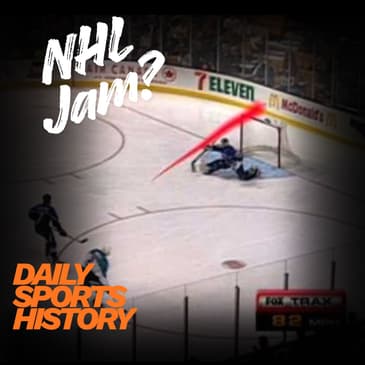
FoxTrax exposed hockey's tradition vs. innovation clash, shaping how NHL grows U.S. audiences amid AR, stats overload, and "Glow Puck 2.0" talks. Perfect for NHL fans, sports tech buffs, and 90s nostalgia seekers.
FoxTrax, glowing puck, NHL All-Star 1996, glow puck debut, Fox Sports NHL, hockey broadcast history, sports technology innovation, NHL glow puck backlash, Rick Cavallaro, Stan Honey, David Hill, NHL player tracking, 90s sports TV
#FoxTrax, #GlowPuck, #NHLHistory, #HockeyTech, #SportsInnovation, #NHLAllStar1996, #GlowPuckDebut, #NHLBroadcast, #90sNHL, #HockeyLegends, #SportsTech, #DailySportsHistory, #NHLGlowPuck, #FoxSportsNHL, #HockeyPodcast
Buy me a coffee: buymeacoffee.com/dailysportz
Newsletter: https://substack.com/@dailysportshistory?r=3en496&utm_medium=ios&utm_source=stories&shareImageVariant=light
DailySportsHistory.com
Email: dailysportshistory@gmail.com
YouTube: YouTube.com/@dailysportshistory
Twitter: twitter.com/dailysportshis
Facebook: facebook.com/profile.php?id=61551687917253&mibextid=ZbWKwL
It's January twenty, nineteen ninety six at the Boston Garden where the best players in hockey are taking the ice, and the coverage is being done by the Fox Broadcast Company, and they're about to do something unique and innovative that would go on to change another sport forever. They are about to use a technology called foxtrack, which on the TV lights up the puck so you could see it easier. Back in nineteen ninety six, TV's quality was a lot less, especially in sports with the movement going on, and a puck is very small on a TV. So Fox tried to innovate and make it easier for the casual fan to watch and participate and hopefully gain viewership. But it turned out to be a huge mistake as fans hated it and it would be phased out within a couple of years, not to be seen again until another sport took up the technology. Jordanus to day as we dive into the Fox track, a moment in hockey history that changed football forever today on Daily Sports History. Welcome to Daily Sports History. I'm Ethan Reese, your guide because when I play hockey, I never find the puck because I'm hiding behind the goal. So back in nineteen ninety four, Fox had won the contract four NHL games, one hundred and fifty million dollars thirty one million dollars a year. It's a time when hockey was starting to grow. Gretzky was still in the league. Everyone loved hockey, and Fox wanted to get out on. Fox really wanted the chances to innovate, and Fox Sports president David Hill was pushing to solve the vision puck problem. See the casual fan that doesn't watch hockey all the time would end up kind of losing the puck on the ice. Again, a lot grainier footage than we have today. The videos you take on your phone today are still majorly better than we had back in the nineteen nineties. For sports, we've come a long way. So you need to remember that if you've watched old hockey footage, it's hard to see where that puck is. But fans that watch it consistently, their eyes and the way they watch have adjusted to how it works. It could really track it pretty well, but someone doesn't watch all the time might not be able to find the puck very easy. And back then they typically had just kind of one camera that kind of went with the action. They had a few others, but it was a lot more simpler set up. So they put Rick Cavallero on the case to make the puck be able to travel or to do something to make the puck easier to see for fans, and he's joined with electrical engineer Stan Honey and they work together and they find a navigating tech company called e Trac to see if they can turn this rubber disk to a trackable object. Oh, they go to town on it. They try to figure out how they can do this, and they actually cut a puck in half, put some circuit boards inside, some shock sensors, some LED lights, and basically glue it back together. And it works. The LEDs pulls about thirty times per second, detecting movement of what is going on across the rink, and it's able to be tracked by another camera. And so basically what they can do is they can have two screens. One screen is the hockey game that's going on. The other screen is a just blank screen with a dot moving around, which is the puck. So their plan is to take these two screens and put the dot on top of the game, and they make that dot blue so you could see it. But when that dot is sped up to over seventy miles an hour, which is basically a slap shot or any shot going on in the game or a hard pass, then it lights up red like a video game, like an NBA Jam video game from the nineties, but for hockey. I know, it's silly to think about, but they're able to do this. It seems crazy, but it actually does work. Now. They originally went with a blue color and it was just a placeholder to test it, but it actually worked out pretty good because it was a different color than most of the teams war so it didn't clash with the teams, and if you use red for the slap shots, the blue really kind of worked out. So they tested it and actually they the Fox executives liked it. It was promising, but they wanted it to be more polished. It was a little bit laggy and it didn't look clear. Still, they went back to the drawing board and they actually called the blue dot the blue Hedgehog because it kind of looked like a hedgehog, like a popular nineties character Sonic or something. A blue Hedgehog, so they compared it to that, and they also needed to figure out another issue they had because remember they cut up in the puck and they put things in it, they hollowed things out. Well, when you take things out of a puck, it's going to change the weight and distribution of it. So they had to make the puck exactly like it was normally. So they had to add some extra weight to make it the exact same even though it had these electronic components inside of it. Because these are professional hockey players, they'll know when that puck is not right. So they come to test it on All Star weekend because it's a good time to test it. It's an exhibition game. It's a time when you have a lot more casual fans and regular fans together and you can gauge what people think about. And so they had a whole workstation trailer just for this Fox track puck that was going to track it in real time. Now, remember the fans in the stands don't see any of this. It's still just a black puck they see. They don't see any lights, they don't see anything at all. It is only for the national broadcast, So the All stars don't see anything different. It's only the people at home, but they do run into problems because occasionally there's a scrump and there's a lot of people on there, and the problem is that blue dot is going through people is not working. It's floating on its own, it's slightly off of the puck. It's not keeping up with the speed of the game, and fans at home are still like, what is this. The comedy have to explain what they're seeing because it's so different than what they're used to. And honestly, everyone that was a hockey fan hated it. The casual fans, the people that didn't want hockey on a regular basis, actually enjoyed it. It was easier to watch the game. It made it more fun and enjoyable. It was an innovation that actually caused some people to come to it. Fans hate it. They called it NBA jam for idiots. They called it the blue Cherry from Chernobyl. It was just a terrible innovation. And later on ESPN would do a list of the worst innovations in sports history and it was right there behind Astro turf and the BCS. It was hated by hockey fans from both Canada and America, and it made hockey fans feel like Fox was saying they were stupid that they couldn't follow the game. So what are you going to do? You had fifty to fifty, You had people that were new and really liked it, and you had people that die hard fans and hated it. What do you do? You go with the fans every time the die hearts. They're the ones that will always be there. Casual fans are casual. It's nice to grow, it's nice to get new fans, but if you lose your Diehart fans, you will not be able to sustain yourself. So after two years of doing this, after eighteen ninety eight, their contract was up with the NHL as it moved to ABC and ABC did not keep the Fox track, partly because it had the Fox name in it, but they didn't see it was a necessary point and the last time it was used was Game one of the nineteen ninety eight Stanley Cup Finals, a blip in history for hockey. But it wasn't completely done. See, this technology made its way over to the NFL. See, the NFL had another issue that they were trying to do. They wanted to make it easier for fans to know where a first down was. This technology was reinvented and used to make the first down yellow line in the blue line for the line of scrimmage that we see in NFL games, a thing that we often forget about now as it is so ingrained in national football, But there was a time in the nineteen nineties when it was not. You had to listen to the commentators, you had to look at the sticks, You had to guess was this the hash mark that we needed to get to. It was a lot different. It was more suspenseful than it is today. But now but without this fox track technology in the NHL, the lines we have on the NFL may have not been there, and it would have changed things. Sometimes inventions and stuff that we may end up being something great for something else, we just never know. We have to continue to innovate, and now we have tracking all over the place how fast balls are thrown, or how fast a hockey puck goes, or how much a skater is skating around or how fast they are going. Technology has entered in two sports like never before. It's moments like these that show you have to test it to see if it'll work, because there's actually talk about bringing something similar to this back again. With our new technology, it can be better done and you can have the option of to have it or not, and that might be something interesting for the future. But I want to know, did you ever see one of these fox track games? Because it is a crazy moment and they are videos that are hard to find about it. You can find a few on YouTube, but they got to vary. This it's not around very much. Hockey does not like this moment. I want to thank you for listening to Today's Daily Sports History. If you enjoy this, please make sure you subscribe wherever you're at. It means that you will not miss another episode and you can come back tomorrow and we'll see you on the next one.