#HistoryPodcast, #1719, #PrizeFight, #BoxingHistory, #BareKnuckleBoxing, #CombatSports, #SportsHistory, #HistoricalEvents, #EarlyBoxing, #PodcastEpisode
Buy me a coffee: buymeacoffee.com/dailysportz
Newsletter: https://substack.com/@dailysportshistory?r=3en496&utm_medium=ios&utm_source=stories&shareImageVariant=light
DailySportsHistory.com
Email: dailysportshistory@gmail.com
YouTube: YouTube.com/@dailysportshistory
Twitter: twitter.com/dailysportshis
Facebook: facebook.com/profile.php?id=61551687917253&mibextid=ZbWKwL
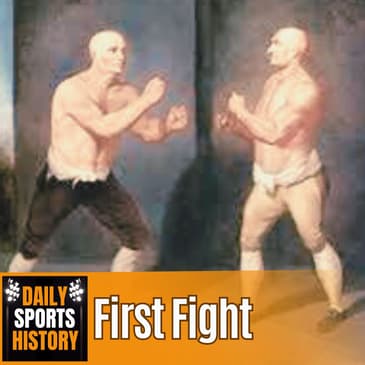
On May twenty seventh, seventeen nineteen. The sport of boxing officially gets its start when a skilled fighter and trainer, James Figgs of London, becomes the very first prize fighting champion, and he continues to grow the sports for the rest of his life and is known as the father of Boxing. We're going to dive into the story behind all of this today on Daily Sports History. Welcome to Daily Sports History. I'm Ethan Reese, your guide to a rapid deep dive into sports history every day. And today's trivia question is who is the only person to ever beat James Figgs in a fight? Now, boxing and wrestling and fighting are all kind of involved in the same sport and have branched off from the combat sports that it started in way back in the Olympics when wrestling was the first official combat sport, where wrestling had striking and grappling involved in it as well. The only rule they had back in the ancient Olympics in sixteen fifty BCE was no fighting and no eye gouging, and combat sports continued to evolve. In three hundred BCE, gladiators used weapons as well as hand to hand combat to please the fans. Now they weren't competing for prizes but more for their life, which made it a very different kind of sport. And fighting continued to evolve. In the fourteen hundreds is when we had night combats where they jousted, but they also did hand to hand and weapon fighting as well, and this all leads up to bare knuckle boxing in the sixteenth century, which later became known as prize fighting as you were fighting for a prize, and eventually got to be known as boxing that we know today. But back then there were no rounds to their fights and they really wasn't organized. It was more duels like we think of in the Old West, where they would duel with guns, but this was a duel to show your manhood, or you got in a fight because someone cheated you out of money, and fights would not be halted until someone said they were done, or the fight was broken up by the crowd, police cheating, or both men decided to stop in a draw. At this time, there were no limits to rounds, but they would generally be pretty short and fighters would go down on a knee multiple times and get a thirty second rest before they would start to fight again. But it wasn't until seventeen to nineteen when they officially put a prize fighting champion together, and this was the very first organized prize fight. There were fights previously, a lot of times it was between slaves or just people fighting over issues in their lives. This was the first time people were fighting to show they could fight, and it was very much a turnable carnival style. They sign up, give a little bit of money for the sign up and whoever won would get all the money that people used to sign up for the fight, and that's how they got the term prize fighting. As the winner took the prize and James fig was the first one to win this fight. Now, James wasn't a big man by today's standards. He stood about six feet tall at about one hundred and eighty five pounds, but back then he was large for the time and not only did he win this fight, he took this and made it a career in a livelihood and made a legacy out of it. He was born in the late sixteen hundreds. We don't have an exact date, but it was born in Oxfordshire. It started training in combat in seventeen fourteen, so by the time the first Prize Fight Championship came around. He was known as as an instructor for defense and martial arts, but he was specifically known for his skills with weapons, including short swords, quarter staffs, and codjails, as well as hand to hand comp and that same year that he won the first Prize Fighting Championship, he also opened up the first London fighting venue that could hold up to a thousand people and was the first of its kind, as these fights were normally held at festivals that were pop up and would be torn down, but this was a permanent location, just like the sports arenas that we have today. In the venue he opened, he wouldn't just put on fights, he would join in on the fights and he would have people he would regularly fight, similar to wrestling that we have today. Like you have your favorite wrestler faces rivals. He had rivals as well, which included Ned Sutton and he defeated him multiple times on multiple different occasions. But he also promoted fights between female al combatants as well and put together animal blood sports as well. The cockfights or dog fights that you hear about where they really got popular as well. But he grew this into a strong business, and on top of this, he would train fighters for these main events and then promote them, similar to a trainer and promoter that we have in boxing today. He was the first of his kind and over his whole career he claimed to fight in over two hundred matches and he even organized the first international boxing match back in seventeen to twenty five between a Vienna fighter and an English fighter. And his fights were getting so popular that Keen George the Second even was a spectator and they made a royal box at his arena just so he could see the fights. And we mentioned that he had beat his biggest rival, Ned Sutton multiple times, but Ned was not going to give up. In the fourth time they fight, Ned finally got the best of them when he wounded figgs belly then pierced his foot in the fight, Figgs finally had his first and only lost, but he did leave Sutton wound and bleeding, even though he lost. Two years later, though Figgs would get another chance to beat Sutton, his rival, in front of over one thousand spectators, including Prime Minister of England at the time, but in seventeen thirty Figs would finally retire and he reported to win two hundred and seventy one contest, and during his last fight he had cut his wrist to the bone and could not use his hand as well as before, so he had to retire. Otherwise he would have kept fighting. But even though he retired didn't mean he just went away. He still fought exhibition matches, more for fairs and fought Jack Broughton, who is another key factor in the growth of boxing, as Jack made the rules that we have to day for boxing, as in the basic rules that he wrote down in seventeen forty three, which were no hitting a man when he's dead and they have a right to thirty seconds of rest after they go down and no hitting below the belt. But despite these little fights and everything, Figgs had a tough life and four years after retirement he passed away, leaving behind a wife who was pregnant with his son, and he had a great student, George Taylor, who took over the business and took over the title of prize fighting Champion. By this time, Figgs was one of the most recognizable and famous people in London. He was known by royalty, aristocrats, politicians, writers, artists and actors for his amazing fights he put on and participated in, and in nineteen ninety two he was officially inducted into the International Boxing Hall of Fame, and in twenty ten he was inducted into the Bare Knuckle Boxing Hall of Fame. What we should remember about this first prize fighting is the greatness that was made and not given. James Figgs took his skills and made the sport what it is today. Before it was just fighting, not a sport, and he took the skills in the business and then know how to make it into a sport that has grown beyond his belief. Boxing is one of the most popular sports in the world, despite having its own challenges throughout the years. And it all goes back to James Figs and thank you for remembering to listen to us today. That is the best way you can help us grow is to listen and share wherever you can because you're a great sports historian just like me and can come back tomorrow for more daily sports history. Did you catch the answer to the trivia question who is the only man to beat James fig in a fight? Ned Sutton