#DailySportsHistory, #HidilynDiaz, #GoldMedal, #Tokyo2020, #Weightlifting, #OlympicHistory, #Philippines, #SportsPodcast, #HistoricVictory, #InspiringAthletes
Buy me a coffee: buymeacoffee.com/dailysportz
Newsletter: https://substack.com/@dailysportshistory?r=3en496&utm_medium=ios&utm_source=stories&shareImageVariant=light
DailySportsHistory.com
Email: dailysportshistory@gmail.com
YouTube: YouTube.com/@dailysportshistory
Twitter: twitter.com/dailysportshis
Facebook: facebook.com/profile.php?id=61551687917253&mibextid=ZbWKwL
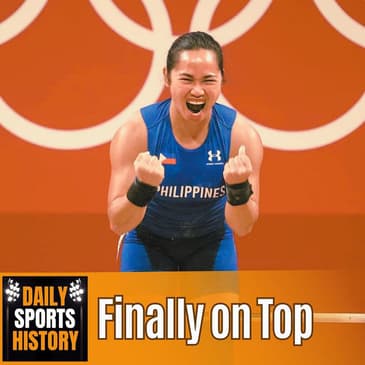
On July twenty sixth, twenty twenty one, something that had never happened before happened at the Tokyo Olympics. The country of the Philippines, who had been participating since the nineteen twenties in the Olympics, ended the longest drought to win a gold medal at the Olympics of over ninety years when women's weightlifter Heideln Diaz became the country's first gold medal winner, showing perseverance through all her trials and becoming a hero for her nation. Here's a story behind how she did it. Today on Daily Sports History, Welcome to Daily Sports History. I'm Ethan Reese, your guide to a rapid deep dive into sports history every day. And today's trivia question is what four countries won their first gold medal at the Tokyo twenty twenty one Olympics. Before we dive into hot store worry, first, let's see why is it so hard for these smaller countries to win gold at the Olympics. And one of the most obvious reasons is population. If you have a smaller population, you have less athletes to have the possibility to be the best in the world and then also because there's less population, there's less funding that can be put into sports infrastructures, training facilities, equipment development, and there's less competition. There's less coaches, there's less sports scientists, nutritionists, sports doctors, and many of these smaller countries actually have economic challenges as well as they are just trying to sustain the small population they have. Some of these populations, some of these small countries have great economic life, but a lot of them are very rule and don't have the infrastructure to have success. That doesn't mean there aren't some outliers such as Jamaica is a very small country, but they excel at track and field, especially in sprinters as we all know Usaint Bowl, but there are many other Jamaican sprinters, both men and women, that continuously make the podium every year. And Fiji and New Zealand are great rugby countries despite their small population as well. So one thing that these countries did is they focused their resources on these specific events and has helped them have success at the Olympics. And the Philippines have a great history in sports. They first started in the Olympic Games in nineteen twenty four and have been a participant every year, but in nineteen eighty when they boycotted the Olympics with sixty six other countries around the world. But in the nineteen twenty four Paris Olympics they only had one athlete, but they continuously grew the number of athletes, reaching a total of fifty three athletes in the Munich Games in nineteen seventy two, but that has declined ever since. They only sent nineteen total athletes to the Tokyo twenty twenty one Olympics. But in nineteen twenty eight they actually won their very first bronze medal in the sport of boxing, which they have had a lot of success in boxing, as they've won a total of fourteen medals in eight of which have come in boxing. But if you follow boxing, there have been many great Filipino boxers throughout the years, and that is where they focused. But that's not where they won their first gold. Now, that came from weightlifting, which is a unique sport in itself and has come a long way as when it was first done, there was different kinds of lifts with one arm, two arms, doing presses, doing all different kind of lifts, and it's evolved into what it is today which is known as Olympic lifting, which is the snatch and the clean. Now, the snatch, if you don't know, is when you take a barbell with weights on the side, and you take the barbell from the ground and lift all the way over your head in one motion. Now, the clean is a two step lift where you take the barbell, you lift it up to your chest and then you lift it over your head. And the way that scoring is done is you take those two lifts and your highest weight total is your total score. What's interesting is before you start the competition, you list out three weights that you're gonna try to achieve at each lift. So going into the event, you know the highest possible position you can win. So you know, going in, the best I can do is silver, or the best I can do is gold, or the best I can do is twelve. You know, going in the best you can do is So it's a good barometer and it's an interesting take as you know if you can win gold or you know if you can't. And it's not always good to go for the highest amount. If you do the highest amount, then you may not get it, but someone else may not get their lifts. In so they'll be disqualified for their number and you would slide into that spot. So it's a game of chests, and there is a lot of strategy now here in the stories. When we come to Heideln Diaz from the Philippines. She grew up in poorer part of the Philippines where her farmer was a tricycle driver and then a farmer and a fisherman, and she grew up doing odd jobs like that as well. She later went to school where they had a program that had a weightlifting program in it, where she had grown to love that from her cousin who was a weightlifter as well, and by the age of thirteen, she was already a part of the Philippine national weightlifting team, competing in her first competition in two thousand and two, and continued to gain strength and in two thousand and eight she was given a wild card entry into the Beijing Olympics. Now, a wild card entry is an entry where you didn't actually make the criteria to make the Olympics, but they're trying to include diversity and athletes from smaller nations to allow them a chance to compete and grow the sport even in their countries, so she was a perfect match for that in Beijing, very close to the Philippines, and she was the first female weightlifter for the Philippines to make the Olympics, and only the sixth weightlifter for the whole country and over their ninety years of competing in the Olympics. She competed in the women's fifty eight kilogram division, and they separate their weight classes just like they do in wrestling and boxing, and this is about one hundred and twenty seven pounds if you're in America, and at the age of seventeen, she lifted eighty five kilograms for her snatch, which is roughly one hundred and eighty seven pounds, and for her clean and jerk she did one hundred and seven kilograms, which is roughly two hundred and thirty five pounds as a seventeen year old. That's great, although it's only good enough for eleventh place at the Olympics. But this was her first time and she was just a teenager, and she continued this love and she actually got more backing from the Philippine Sport Commission because of this, as she was viewed as someone with a bright future for their program, and she continued to lift, and she went back actually to try to further her education and join the Air Force as well, and she continued to grow her com petition. She became the first Filippina weightlifter to compete in consecutive Olympics when she was able to qualify for the twenty twelve Olympics and was actually chosen as the flag bearer for the Philippine nation in the opening ceremony, and her snatch was good enough for twelve best in the nineteen competitors, but she was unable to clean and jerk her one hundred and eighteen kilograms after three attempts, which meant she was disqualified, which meant she got a did not finish that which was two hundred and sixty pounds, which meant she got a did not finish for that event. But this didn't discourage her to continue to grow. She went home and was still a hero in her nation, and she went on to win the twenty fifteen Asian Weightlifting Championships, and this is where she made the decision before the Rio Games to drop her weight class to the fifty three kilogram weight class, which is roughly one hundred and sixteen pounds. This is something we often see in wrestling and boxing. You drop a weight class and you can have a lot more success because you still have that power you had and she was able to qualify for the twenty sixteen Reo Olympic Games, and this is where she made a name for herself, not only in the weightlifting community, but in her own country, where she went on to lift eighty eight kilograms in her snatch, which is one hundred and ninety five pounds, which was good enough for sixth place in the whole class, and then she went on to clean and jerk one hundred and twelve kilograms which is two hundred and forty six pounds, and her combined total weight got her the silver medal and was the first non boxing medal that the Philippines had won since nineteen thirty six. And this changed her life forever as it gave her the opportunity to grow even more. She got more support from the Philippine Sports Commission and she was able to buy a land for her siblings and create a gym for herself. In other weightlifters, but she was not done yet. She continued to grow in the sport, but Sadly, the twenty twenty Olympics was postponed due due to the COVID pandemic, which we covered in a previous episode. But on July twenty sixth, twenty twenty one, she did something that no Filipino had ever done before, where she set an Olympic weightlifting record for her clean and jerk at one hundred and twenty seven kilograms, which is almost two hundred and eighty pounds, and lifted ninety seven on her snatch, which is roughly two hundred and thirteen pounds, with a total of two hundred and twenty four kilograms, which she was able to achieve on her last lift, beating the number one ranked weightlifter in her class, q Y Leon from China by one kilogram, breaking the longest drout between starting in the Olympics and winning a gold medal for the Philippines, as she won the very first Philippine gold medal. It's not super common for countries to win their first gold medal in the Olympics. It usually happens once or twice a year, but not super common, but there was also three other countries that won their first gold medal this year. Qatar won their gold medal from maut Esse Barsam in the middle high jump, and then Bermuda when their first when Flora Duffy won a gold in the women's triathlon, and Puerto Rico won their first gold when Jasmine Camacho Quinn won the women's one hundred meter hurdles. But this is great for all these countries. Gives you clouts across the whole world, and it gave Heidelenn clout in her country as she became a symbol. She came back and was on talk shows across the country, was everywhere getting support from everyone. And she did this while training during the pandemic where she couldn't go to gyms, she couldn't have coaches around. She trained using bags and concrete weights because she couldn't go to a regular gym, which makes it even more impressive that she was able to win something she had never done before, and she was able to show women in her country that you don't have to do the status quo. As when she started weightlifting, her mom discouraged her as that's not what Filipino women do. We stay at home, we take care of the family. But she was not gonna stand by and do what the average person did. And she went out and broke down barriers. And she's actually gonna be competing in the twenty twenty four Olympic Games to try to defend her title, although she said it'll probably be her last. But she left her mark not only in the Philippines but in the world. And that's always and that's one of the greatest things about the Olympic Games. And if you like this story, please share it with a friend wherever you're at. You just post it on social media, send a text, how shout it from the rooftops, however you'd like to share. We'd be internally grateful and come back next week for more daily sports history. But in that first in the nineteen twenty four Paris Olympics, they only had one athlete. And did you catch the answer to today's trivia question what four countries when their first gold medal at the Tokyo twenty twenty one Olympics. In the answer kathar Bermuda, Puerto Rico in the Philippines. M hmm, yeah,